First-Time Luxor Guide: How to Plan the East and West Banks
Orient your first Luxor visit across the East and West Banks, with guidance on trip length, transport, pacing, sunrise activities, and Nile connections.



Plan a Valley of the Kings visit by checking which tombs are open, deciding whether any separately ticketed tomb matters to you, and keeping the physical conditions in mind. Access and ticket combinations can change, so use the official information for your date rather than a fixed “best tombs” list from an old article.
Visitor arrangements commonly distinguish between a base entry and certain additional tombs, but the exact bundle, prices, and open rotation are time-sensitive. Ask the official ticket source or your operator three direct questions: which tombs the base admission covers, which require an additional ticket, and which are expected to be open that day.
A named tomb can still close for conservation or operational reasons. Choose a broader goal—colour, scale, symbolism, or changes in royal burial design—so the visit remains worthwhile if the precise set changes.
Tombs are not interchangeable, yet entering too many in quick succession can make their details merge. A thoughtful selection lets you notice layout, decoration, text, and changing ideas about the afterlife. Take time outside between interiors to let your eyes and body adjust.
If one famous tomb is important, understand what its separate ticket gives you and how it fits the rest of the route. Fame alone does not guarantee that it will be your most meaningful experience.
A guide can explain the valley’s geography, burial programme, artistic conventions, and selected scenes before entry. On-site rules may limit guiding inside individual tombs, so ask where explanations take place. A good guide prepares you to look independently rather than talking over a narrow interior.
Confirm credentials and service scope with the Egyptologist guide checklist. A driver, site escort, and Egyptologist guide are distinct roles.
The valley is exposed, and the route can involve ramps, steps, uneven surfaces, and walking between transport points and entrances. Tomb interiors vary: some passages are longer, steeper, narrower, or warmer than others. Anyone with mobility, respiratory, cardiovascular, balance, or claustrophobia concerns should seek appropriate advice and request current route specifics.
Rules for still images, phones, video, flash, tripods, and professional equipment can change. Follow the current ticket terms, signs, and staff direction. Never use flash where prohibited, touch painted walls, lean equipment against a surface, or hold up a narrow passage for a photograph.
If photography is central to the visit, verify the exact permission beforehand. Do not rely on another visitor’s social-media post as evidence that an action is allowed.
One memorial temple can add context about royal commemoration above ground. Deir el-Medina provides a different perspective through the community associated with making royal tombs. Choose one addition that supports your interests and energy, using the Luxor West Bank route guide.
For deeper social history, read the Deir el-Medina guide. Travellers planning for mobility needs should also consult the accessible Egypt tour questions and request product-specific answers.
If your attention is fading, stop after the valley rather than treating an additional temple as an obligation. The quality of the final visit matters more than completing the advertised maximum.
| Item | Required detail |
|---|---|
| Admission | Base ticket, separate tombs, and payment responsibility |
| Guide | Where interpretation occurs and how long the service lasts |
| Transport | Hotel bank, vehicle, parking, and local shuttle arrangements |
| Route | Other West Bank sites and what is conditional |
| Accessibility | Specific slopes, steps, surfaces, seating, and restroom information |
Review the private Luxor West Bank tombs and temples tour or browse other Luxor tours. A successful visit is not the one with the highest tomb count; it is the one where conservation rules, physical comfort, and historical curiosity are held in balance.
A curated list of the most popular travel packages based on different destinations.
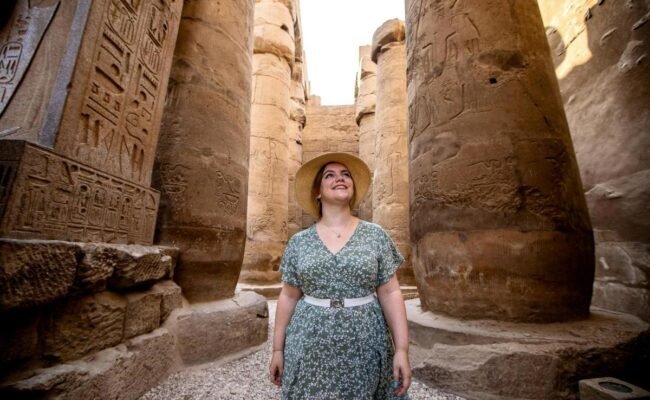
Orient your first Luxor visit across the East and West Banks, with guidance on trip length, transport, pacing, sunrise activities, and Nile connections.

Choose a coherent Luxor West Bank route by balancing royal tombs, memorial temples, Deir el-Medina, ticket options, heat, and walking pace.

Discover why Deir el-Medina deserves a focused West Bank visit, from its workers’ community and decorated tombs to a thoughtful specialist route.

Understand Luxor balloon pickup, weather dependency, clothing, accessibility, operator questions, and cancellation terms before reserving a flight.

Plan Karnak and Luxor Temple as a connected East Bank experience, with realistic pacing, timing choices, guide questions, and mobility considerations.
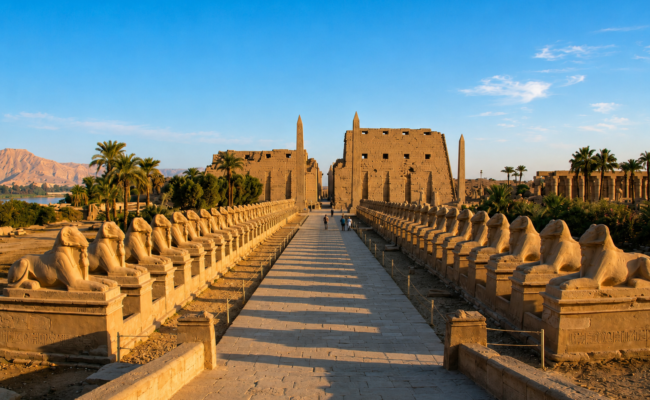
Make one day in Luxor work by choosing a balanced East and West Bank route, with flexible options for pace, heat, transport, and deeper interests.



