One Day in Luxor: East and West Bank Itinerary
Make one day in Luxor work by choosing a balanced East and West Bank route, with flexible options for pace, heat, transport, and deeper interests.



Deir el-Medina is the West Bank site for travellers who want to move beyond royal monuments and consider the community connected with building and decorating royal tombs. Its settlement remains, chapels, texts, and richly decorated non-royal tombs open a view onto work, family, belief, dispute, and craft. Give it enough time to stand as a subject, not a hurried extra.
At the largest royal sites, the names of kings dominate. Deir el-Medina redirects attention toward skilled workers and their households. Archaeological remains and surviving records have contributed unusually detailed evidence about community life, although interpretation continues to develop and individual objects now reside in collections around the world.
The site helps a visitor ask different questions: Who produced the images inside royal tombs? How did specialised work shape a settlement? What did non-royal families hope for in death? Those questions enrich a later visit to the Valley of the Kings.
Open areas and ticket arrangements can change. Ask which elements are included on the day and whether separate admissions apply.
Tell the guide that you are interested in social history rather than only a catalogue of scenes. Ask them to distinguish between what the archaeological evidence supports, what comes from texts, and what remains an interpretation. This is a good site for discussing the limits of the evidence as well as its richness.
A guide may need to explain tomb decoration outside the interior under current site rules. Confirm the approach and use the guide-selection checklist if you want a specialist.
The strongest pairing is usually thematic. Selected Valley of the Kings tombs let you see the royal spaces associated with the community’s work. A nearby non-royal or memorial site can expand the view of West Bank society. Avoid adding several large monuments simply because they appear on the same map.
The Luxor West Bank guide compares broader routes, and the Valley of the Kings guide explains its variable ticket process.
Expect exposed outdoor areas, uneven ground, thresholds, and tomb interiors that may involve slopes, steps, narrow passages, or limited room. Shade and seating may not appear exactly where needed. Ask for current, site-specific accessibility information and decide which elements can be omitted.
Summer or hot-day planning should protect the most exposed part of the visit. In any season, water, secure footwear, and a flexible pace matter. Do not enter a confined space if it is not appropriate for your health or comfort.
Painted tombs are fragile environments. Check the live rules for personal photography, video, flash, and equipment, then follow staff instructions. Never touch walls, lean against surfaces, or allow a bag to brush decoration. If an interior is crowded, wait or move through without blocking others.
| Traveller | Why Deir el-Medina fits |
|---|---|
| Repeat Luxor visitor | It shifts attention away from the standard royal highlight circuit. |
| Art and craft enthusiast | It connects skilled production with intimate funerary imagery. |
| Social-history reader | It creates space for work, family, conflict, and community questions. |
| Traveller avoiding only vast sites | A selective route can be conceptually rich without relying on monumental scale. |
Deir el-Medina appears as one possible focus within the private West Bank tombs and temples tour, subject to the confirmed itinerary and admissions. Browse the Luxor tours hub and ask for a route that protects time at the village rather than using it as a label between longer stops.
Approached with patience, the site changes the scale of Luxor’s story. The makers, families, and local institutions become visible alongside the rulers whose tombs made the West Bank famous.
Afterward, note the questions you want to carry into other tombs and museums. Deir el-Medina is most valuable when it changes how you look at the rest of Luxor, not when it remains an isolated specialist stop.
A curated list of the most popular travel packages based on different destinations.
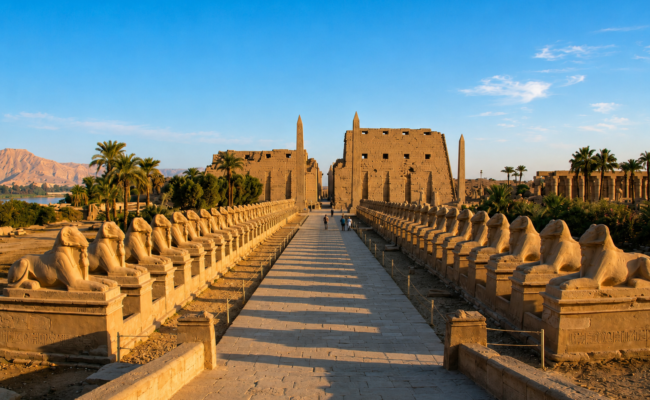
Make one day in Luxor work by choosing a balanced East and West Bank route, with flexible options for pace, heat, transport, and deeper interests.

Choose a coherent Luxor West Bank route by balancing royal tombs, memorial temples, Deir el-Medina, ticket options, heat, and walking pace.
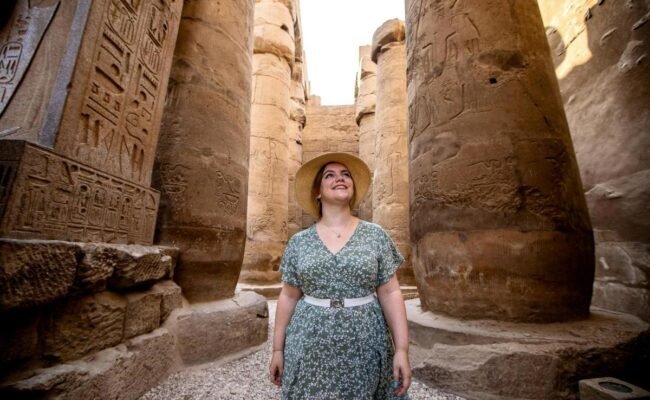
Orient your first Luxor visit across the East and West Banks, with guidance on trip length, transport, pacing, sunrise activities, and Nile connections.

Understand Luxor balloon pickup, weather dependency, clothing, accessibility, operator questions, and cancellation terms before reserving a flight.

Plan Karnak and Luxor Temple as a connected East Bank experience, with realistic pacing, timing choices, guide questions, and mobility considerations.

Plan a Valley of the Kings visit around current tomb access, ticket choices, heat, walking, photography rules, and realistic guide expectations.



