What Is Included on a Nile Cruise? A Booking Checklist
Use this practical checklist to compare Nile cruise accommodation, meals, sightseeing, guides, transfers, fees and optional costs.



The best Nile cruise cabin is the one whose exact location, window, bedding and access match your needs; request a deck plan and written cabin specification rather than relying on labels such as standard or panoramic.
Cabins that sound similar in a booking list can feel very different once the ship is moving or docked. A room near machinery may carry more vibration, a lower window may sit close to the waterline, and a higher deck may involve more stairs. None of those factors is automatically a problem, but they should be a conscious trade-off.
Use this guide while comparing named vessels in the Nile cruise collection. It complements the broader guide to choosing a cruise without assuming that every ship shares the same layout.
A category name alone may cover several positions. Request the deck, cabin number or at least the exact zone before paying a non-refundable balance. On some vessels, the lowest passenger deck has windows near river level; on others, all cabins sit higher.
Deck plans can change after refurbishment, and booking graphics are not always to scale. Confirm important details in writing: the side of the ship cannot guarantee a permanent view because vessels often dock alongside one another and change direction.
Panoramic, French balcony, picture window and opening window are not interchangeable terms. Ask whether the glass opens, whether there is an exterior step-out space, and whether a rail or fixed lower panel affects the view. Most Nile cruise cabins do not have the same balcony arrangement travellers may know from ocean ships.
Docking beside another vessel is routine on busy stretches of the river. At times the view may be another ship rather than open water, and guests may pass through neighbouring vessels to reach shore. This is an operating reality, not necessarily a cabin fault.
No cabin can be promised silent. Engines, generators, pumps, mooring activity, music and other guests all contribute. Light sleepers should ask about proximity to machinery, stairs, lifts, lounges, kitchens and the sun deck. A cabin at the far end of a corridor can be quieter for foot traffic but less convenient for limited mobility.
Pack comfortable earplugs if you use them at home, but do not use them as a substitute for discussing a serious sensory or sleep need. Requesting a quiet zone is useful; treating it as a guarantee is not.
Twin beds may push together, while a listed double may be fixed. Ask about mattress configuration, extra beds and the usable floor area after luggage is inside. Families should confirm the actual sleeping arrangement and occupancy limit rather than assuming a child can share.
For the bathroom, request shower access, lip or step height, grab rails and door width when these matter. Climate-control descriptions should state whether the cabin has individual adjustment and whether the system operates while docked. Do not assume a familiar hotel standard from a star label.
Ask whether a lift reaches the restaurant, reception, cabin deck and sun deck, and whether it operates during all phases of the journey. A lift inside the vessel does not solve gangway steps, uneven quays or shore-excursion access.
Send your mobility equipment dimensions and describe what assistance you can safely accept. The accessible Egypt planning checklist helps document requirements without relying on vague accessible labels.
Ask the operator to confirm: vessel name; cabin category and number; deck; distance from engines and public rooms; window type; bed setup; bathroom access; lift coverage; climate control; and any adjoining door. Add dietary, medical-equipment or refrigerated-storage needs only if relevant.
Then compare the complete quote using the cruise booking checklist. A cabin upgrade may not change the sightseeing, transfers or guide arrangement.
There is no consistently superior side because the ship changes heading and docking position. Cabin height and obstructions are usually more useful questions.
No. It may be convenient and bright, but can be closer to the sun deck or require stairs. Choose according to your priorities.
Operators may accept a location request, but normal vessel and docking sounds make an absolute guarantee unrealistic.
Shortlist cabins only after seeing the current deck plan. If a location or access feature is essential, put it in the booking record and ask what remedy applies if the allocated cabin changes.
A curated list of the most popular travel packages based on different destinations.

Use this practical checklist to compare Nile cruise accommodation, meals, sightseeing, guides, transfers, fees and optional costs.
A practical Dahabiya guide covering small-vessel pace, shared versus private sailings, cabins, moorings, access and booking questions.
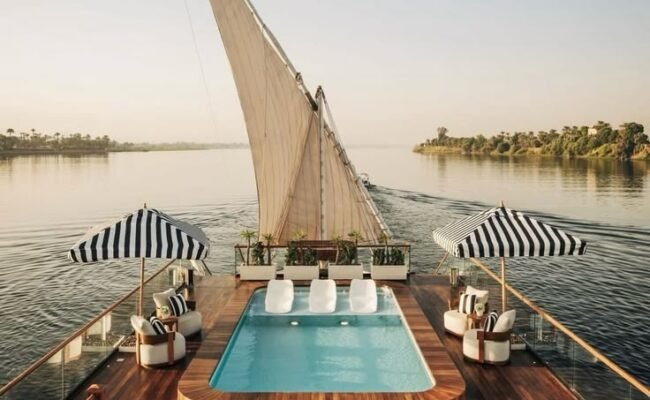
Compare a conventional Nile cruise with a dahabiya by pace, vessel size, comfort, mooring style, accessibility and cost drivers.
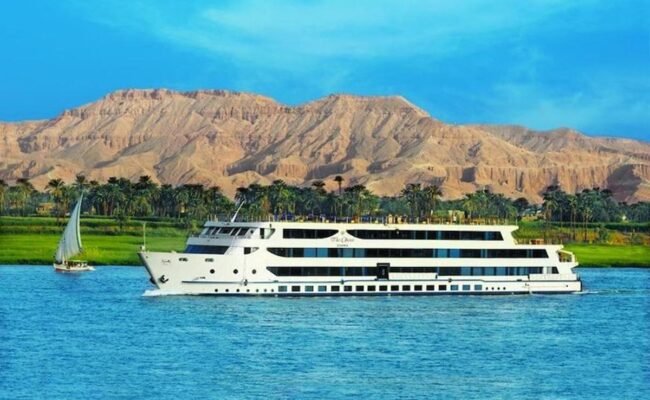
Understand the pace of a three-night Aswan-to-Luxor Nile cruise, including arrival planning, common stops and the Luxor finish.

Choose a Nile cruise by verifying the named vessel, sailing direction, cabin position, board basis, guiding model, inclusions, and operating dates.

Plan a four-night Luxor-to-Aswan Nile cruise with realistic arrival margins, route expectations, cabin checks and onward connections.

Compare Nile cruise directions by trip length, sightseeing rhythm, arrival plans and onward travel before choosing your route.



